

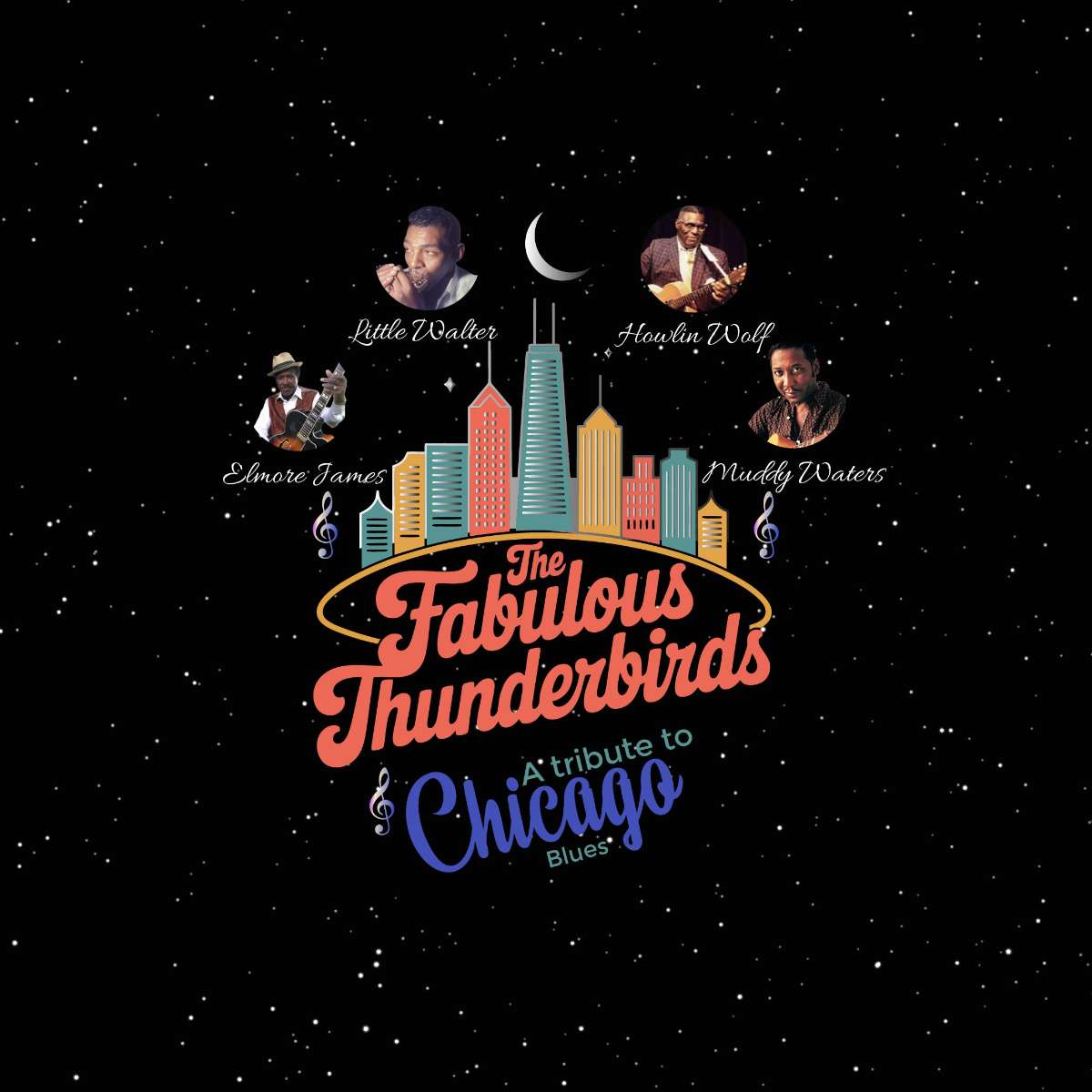
Kim Wilson, the legendary harmonica virtuoso and frontman of The Fabulous Thunderbirds, is preparing for what may be his most personally meaningful tour yet. The upcoming “A Tribute to Chicago Blues” tour represents a homecoming of sorts for Wilson, who cut his teeth playing alongside the very architects of the Chicago blues sound during the genre’s golden era.
“That’s where I live,” Wilson says about Chicago blues. “This is what I love. It’s what I’ve always loved. Everything else that I do, I try and put that mojo on it.”
Early Immersion in the Scene
Wilson’s connection to Chicago blues runs deep, stretching back to his teenage years when he was fortunate enough to witness and learn from the masters themselves. “I was probably about 16 years old, maybe even 15,” Wilson recalls about when he first became aware of the Chicago blues scene. “All my friends were listening to that stuff and all those guys were coming in and playing live everywhere you can imagine.”
The young Wilson saw legends like Johnny Shines, Muddy Waters, George “Harmonica” Smith, and Jimmy Reed perform live. More remarkably, he got to play with them. “I played with Eddie Taylor when I was 18 or 19 years old. That’s about as Chicago blues as you can get,” he notes.
The Sound
What set Chicago blues apart from other regional styles was its distinctive mood and power. “Something about Chicago blues, those guys really knew how to set a mood,” Wilson explains. The migration of blues musicians from the rural South to Chicago created a unique fusion. “They take their district, their region, and they bring it to another city. And it morphs into a combination of a couple of things,” Wilson observes.
The urban environment demanded amplification, which fundamentally changed the sound. “These musicians performed in a lot of other places before they got to Chicago. They soaked up the different scenes across the country,” Wilson says. “Then they put those sounds through an amplifier. Because they were playing in bars. You can’t be heard otherwise.”
Chicago blues was also distinguished by its harmonica-driven sound, featuring legends like Little Walter, James Cotton, and Big Walter. “A lot of Chicago blues was built around the harmonica,” Wilson notes, explaining his natural gravitation toward the genre.
The Human Element
One aspect Wilson emphasizes about the Chicago blues masters is their approachability despite their legendary status. “They were just regular people. That was the thing,” he reflects. “People like Jimmy Rogers, I worked with him, and I love covering his stuff. But he was just a normal guy… with a lot of talent. The same with Muddy Waters, the originator of electric Chicago blues. I would go out to eat with him after a show and no one knew exactly who he was, but they knew he was somebody important. Even the king carried himself like a normal human being.”
This down-to-earth quality extended throughout the blues community. “Big stars, people like B.B. King, people like Bobby Blue Bland, they were still very normal people. That’s because they came from normal backgrounds. They came from having nothing to having a bit of something.”
A Musical Ecosystem
Wilson describes the Chicago blues scene as a thriving ecosystem where hundreds of clubs supported a vibrant community of musicians. “A lot of those guys rarely left the city. They were all playing clubs in Chicago. There were hundreds of them.” This concentration created an environment where musicians constantly pushed each other to excel.